Chronic pain is more than just a persistent symptom. When pain becomes a part of life, it can impair mobility, sleep, mental health, work, and social relationships. Pain management therefore requires accurately identifying the pain mechanism, conducting a comprehensive assessment, and coordinating care across multiple specialties to help patients return to normal life, rather than focusing solely on medications or isolated procedures.
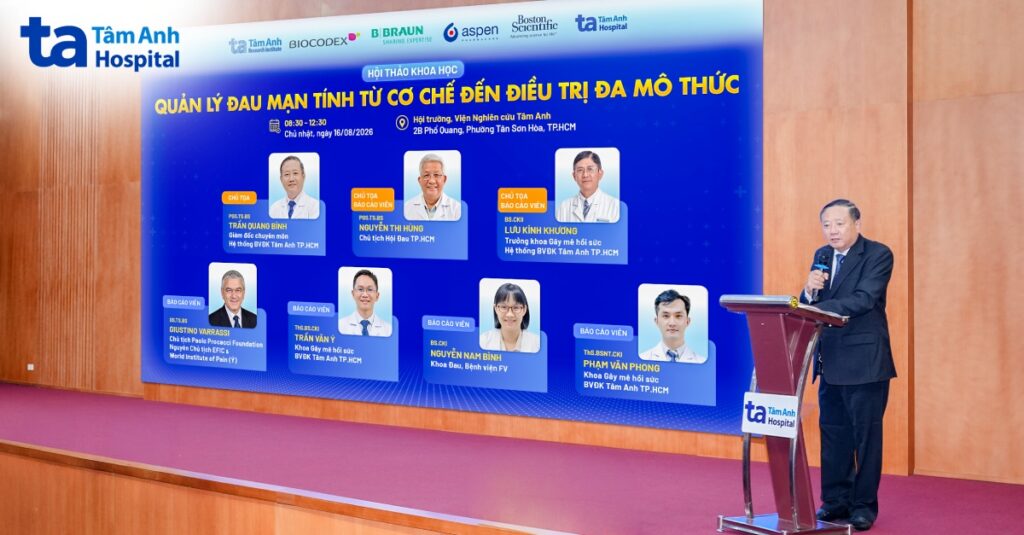
This was shared by Vietnamese and international experts at the scientific conference “Chronic pain management: From mechanisms to multimodal treatment,” organized by Tam Anh General Hospital Group in Ho Chi Minh City (HCMC) on August 16, 2026.
The conference brought together Vietnamese and international experts to discuss advances in pain medicine, from identifying pain mechanisms and assessing patients to evidence-based treatment strategies and modern interventional techniques.
Assoc. Prof. Tran Quang Binh, MD, PhD, Medical Director of Tam Anh General Hospital Group in HCMC, said that pain is a common symptom that almost everyone has experienced, but acute and chronic pain need to be understood differently. Acute pain often serves as a warning signal of injury. However, when it persists, pain can become a complex problem that simultaneously affects patients’ physical health, psychological well-being, ability to work, daily activities, and social relationships.
According to Assoc. Prof. Tran Quang Binh, addressing chronic pain requires answering a series of questions: Why is the patient in pain? Where is the pain located? What is the pain mechanism? Why has the pain become chronic? What underlying conditions does the patient have? Only then can physicians select an appropriate treatment strategy. This shows that chronic pain management does not belong to a single specialty and cannot rely solely on analgesics. Without identifying the underlying cause, pathophysiology, and factors that cause the pain to persist, symptom control may not provide long-term effectiveness.
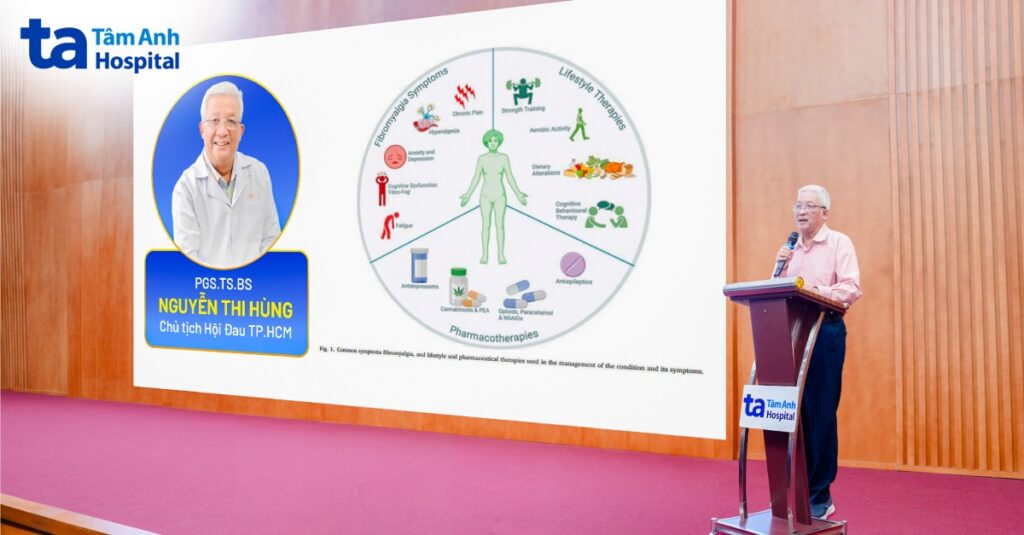
One of the notable topics at the conference was nociplastic pain, which Assoc. Prof. Nguyen Thi Hung, MD, PhD, President of the Ho Chi Minh City Pain Association, analyzed from the perspective of challenges in clinical practice. Patients with this type of pain may continue to experience persistent pain even after the initial injury has improved or no longer sufficiently explains the severity of their pain. In such cases, focusing solely on identifying a physical lesion for treatment or simply increasing analgesic use may not produce the expected results.
According to the expert, managing this type of pain requires physicians to accurately identify the pain mechanism, comprehensively assess related factors, and recognize barriers that cause the pain to persist or make it difficult to control. In particular, a collaborative relationship between patients and their primary care physicians plays an important role in helping patients properly understand their condition, increasing their motivation to participate in treatment, and improving adherence to the agreed treatment plan.
From an international perspective, Assoc. Prof. Jessica Nicolas of the Chronic Pain Unit at Paris Saint-Joseph Hospital and the Paolo Procacci Foundation emphasized that pain is also closely linked to each person’s lived experience. This is why patients with the same disease and the same degree of injury may experience pain differently and have different abilities to adapt to it.
For chronic pain, the goal of treatment is not necessarily to reduce pain to zero. While physicians generally aim for rapid pain control in acute pain, the more important goals in chronic pain management are to help patients restore function, return to daily activities, and regain their quality of life.
Assoc. Prof. Jessica Nicolas also shared the challenges involved in establishing a pain center. In addition to a team of physicians with specialized training, a pain center requires organizational support, the ability to individualize treatment, and an effective management mechanism. In particular, capable leadership is needed to coordinate resources and connect multiple specialties throughout the patient’s treatment journey.
Another recurring topic at the conference was the role of anesthesiologists in modern pain medicine. According to Luu Kinh Khuong, MD, Head of Anesthesiology Department at Tam Anh General Hospital Group in HCMC, the role of anesthesiologists extends beyond performing pain-relieving procedures and spans the entire patient care journey.
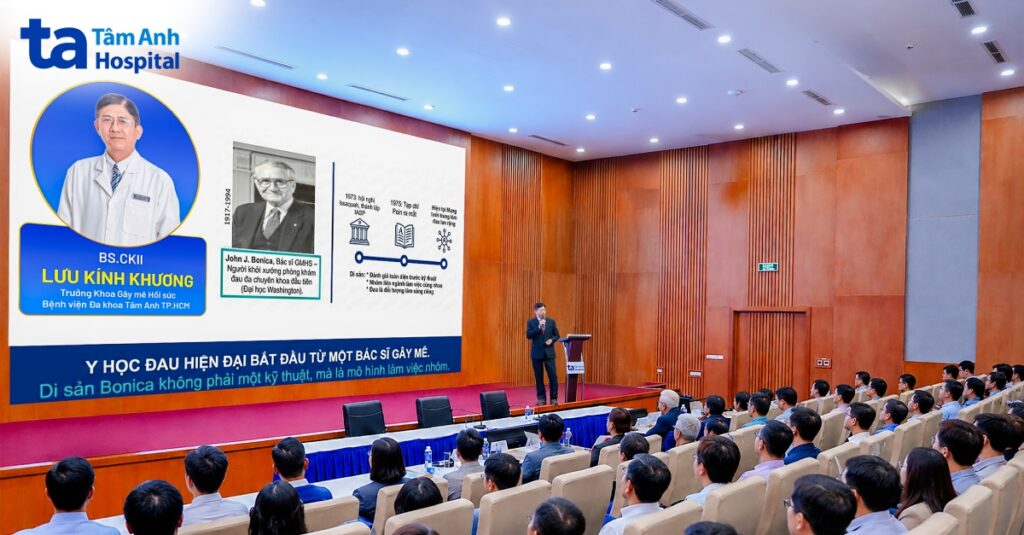
Before treatment, anesthesiologists participate in screening for warning signs, conducting comprehensive assessments, stratifying risks, and identifying pain mechanisms. During treatment, they collaborate on developing multimodal treatment plans, selecting appropriate interventions, managing complications, providing sedation when necessary, and monitoring patient safety. After treatment, the process continues with assessing treatment response, managing analgesic use, reassessing patients according to appropriate criteria, and coordinating care with relevant specialties.
This is particularly important because anesthesiologists can become involved as early as the acute pain stage, which is a critical period for identifying patients at risk of developing chronic pain.
According to Dr. Luu Kinh Khuong, anesthesiologists in modern pain medicine do not simply perform technical procedures. They also participate in assessing pain mechanisms, developing comprehensive treatment plans, and managing patient risks. The ultimate goal is not simply to eliminate pain, but to help patients regain control of their lives.
Tran Van Y, MD, MSc, Anesthesiology Department, Tam Anh General Hospital in HCMC, said the demand for chronic pain treatment is substantial and continues to grow alongside population aging. Although interventional pain procedures such as epidural injections, medial branch radiofrequency ablation, genicular nerve interventions, and celiac plexus neurolysis are becoming increasingly common, significant gaps remain. Vietnam currently lacks an independent and unified specialty or certification system for pain treatment. Treatment remains fragmented across specialties, with limited standardization in indications, treatment consensus, and outcome measurement.
Another issue is that access to procedures or medications is often easier than access to a comprehensive multimodal pain care program. Meanwhile, chronic pain is a major public health burden, particularly musculoskeletal pain, which can impair patients’ mobility, ability to work, and ability to live independently.
To address these gaps, experts proposed developing multidisciplinary Pain Units, where patients can receive care through a standardized process rather than fragmented treatment. The proposed model begins with patient intake and priority screening, followed by a comprehensive pain assessment, development and oversight of a treatment plan, and subsequent outcome monitoring and periodic reassessment.
The first step is to establish a pain clinic to receive and assess patients, followed by standardizing safe, evidence-based interventions, developing a multidisciplinary Pain Unit, and establishing training systems and standardized workforce development.
The conference also provided updates on several practical issues in diagnosis and treatment. Nguyen Nam Binh, MD, from FV Hospital, presented “Neuropathic pain: Updated treatment guidelines.” Pham Van Phong, MD, MSc, Anesthesiology Department at Tam Anh General Hospital in HCMC, provided practical insights into interventional pain procedures, including when interventions should and should not be performed.
The conference demonstrated that chronic pain management should be viewed as a long-term care process, beginning with accurately identifying the underlying mechanism and cause, conducting a comprehensive assessment, selecting appropriate treatment methods, monitoring treatment response, and supporting functional recovery.
With this approach, treatment goals extend beyond symptom control to helping patients improve their mobility, daily activities, ability to work, and quality of life. This is also the direction Tam Anh General Hospital Group in HCMC is pursuing as it develops specialized pain medicine services.